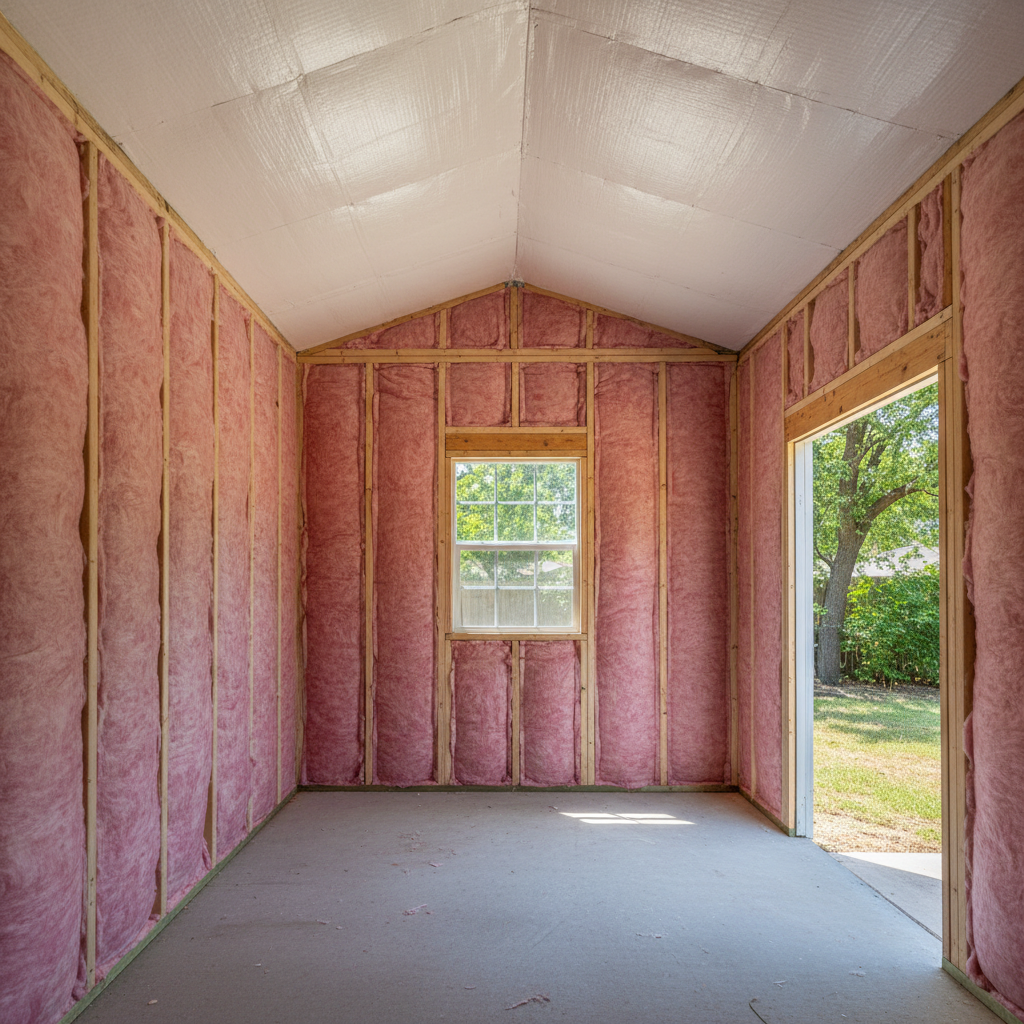
So, you're thinking about insulating your shed. Maybe it's going to be a workshop, a 'she-shed,' a storage space for sensitive items, or even a home office away from the main house. That's a smart move, especially with our Texas summers and those occasional winter freezes. But I've seen a lot of homeowners around Converse—from the newer subdivisions near Judson High to the older homes closer to FM 78—make some pretty common blunders when they insulate their sheds. Let's talk about what to avoid so you don't end up regretting your project.
Mistake #1: Forgetting About Ventilation
This is a big one, and people often miss it. You can pump all the insulation you want into your shed, but if you don't have proper ventilation—especially in our humid climate—you're just asking for trouble. We're talking mold, mildew, and trapped heat that makes your insulation less effective. I've walked into sheds that were insulated beautifully but smelled like a locker room because there was no airflow. You need to think about how air will enter and exit the space. Ridge vents, soffit vents, or even gable vents can make a huge difference. Don't just seal it up tight; let it breathe a little, okay?
Mistake #2: Picking the Wrong Kind of Insulation
Not all insulation is created equal, and what works great in your attic might not be the best choice for a shed. For instance, batt insulation (you know, the pink stuff) is common, but if your shed isn't perfectly sealed against moisture, it can absorb water, lose its R-value, and become a breeding ground for mold. I've seen this happen a lot in sheds that get a little leaky during heavy rain. For sheds, especially here in Converse where we get those sudden downpours, I often recommend closed-cell spray foam or rigid foam boards. They give you a great R-value, act as a vapor barrier, and are much less likely to have moisture problems. Spray foam is definitely an investment, but for a shed you plan to use regularly, it's worth every penny for the comfort and durability.
Mistake #3: Ignoring the Floor
Everyone thinks about the walls and the roof, but what about the floor? If your shed is built directly on the ground or on concrete blocks without a proper moisture barrier and insulation underneath, you're losing a ton of heat in the winter and gaining a lot of heat (and moisture!) in the summer. Cold floors are uncomfortable and can make your shed feel damp. If you're building a new shed, make sure to insulate under the subfloor. For existing sheds, you might need to lift it or create a skirt around the base and insulate the joist bays from underneath. It's a bit more work, but it makes a massive difference in the overall comfort and efficiency.
Mistake #4: Trying to DIY Without the Right Know-How or Tools
I get it, you're handy, and you want to save a buck. I respect that. But insulation, especially spray foam, isn't always a DIY-friendly project. If you don't have the right safety gear, the right equipment, or the experience, you can end up with a mess, an ineffective job, or even health hazards. I've seen folks try to apply spray foam themselves and end up with uneven coverage, off-ratio foam that never cures right, or getting it everywhere it shouldn't be. It's a specialized skill. If you're going with rigid foam boards, make sure you're cutting them precisely and sealing all the gaps with foam sealant or tape. Even small gaps can drastically reduce your insulation's effectiveness.
Mistake #5: Not Sealing Air Leaks Before Insulating
Insulation stops heat transfer through conduction, but it doesn't stop air movement. If you've got gaps and cracks around windows, doors, or where walls meet the floor or ceiling, you're letting conditioned air escape and unconditioned air sneak in. Before you even think about putting up insulation, go around your shed with a can of caulk or expanding foam and seal every single crack and penetration. This is crucial for maximizing your insulation's performance and making your shed truly comfortable and energy-efficient. It's like putting on a warm coat but leaving your zipper open – it just doesn't work as well.
Mistake #6: Hiring the Cheapest Bid Without Checking References
Look, I run Charis Insulation Co., and I know everyone's looking for a good deal. But when it comes to something like insulation, the cheapest bid isn't always the best. I've seen contractors cut corners, use substandard materials, or do a rush job that leaves homeowners disappointed. Always ask for references, check their reviews, and make sure they understand the specific challenges of insulating a shed in our local climate. A good contractor will ask you questions about how you plan to use the shed, discuss ventilation, and explain the different insulation options. Don't be afraid to ask tough questions. You're investing your money, so make sure you're getting quality work that will last.
Insulating your shed is a great idea, but doing it right means avoiding these common pitfalls. Take your time, do your research, and if you're unsure, don't hesitate to call a professional. It'll save you headaches and money in the long run.